
When is a Book Literature?
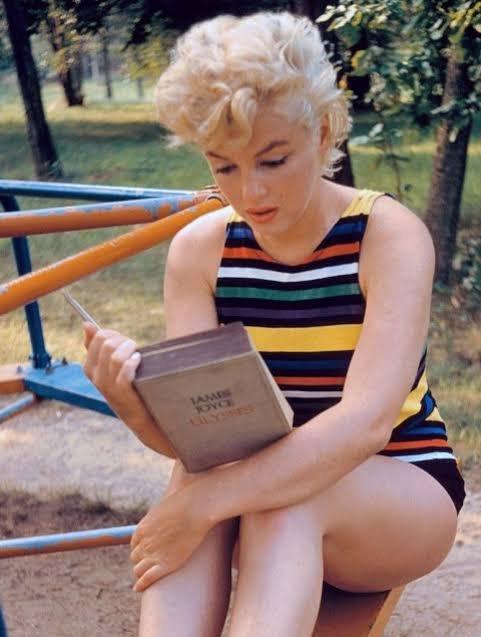
I. Declining Literacy Isn’t The Whole Story
Everyone is worried about the rates of literacy in the United States. And, trust me, I am, too. It’s worrisome that both children and adults are achieving lower literacy scores than they were years ago. It’s embarrassing that the people who promote materials for reading on the most popular and widely accessible platforms proudly claim that they don’t read paragraphs or skip over pages without dialogue. It’s saddening that college professors everywhere are presenting anecdotes about how their students can’t, or won’t, read. Standards are low, and lowering, but that’s not the whole story.
The crisis in reading isn’t just that people are reading fewer books, but that many of the books that people are reading barely ask them to really read. Sure, you follow the plot. Sure, you recognize the tropes. You wait for the kiss; you pick up on clues. But what is the writing actually doing? Surely, what’s inside matters: what the language does, what it asks of us, what the form allows us to see. And when I look at some of the biggest books being published, I can’t help but feel that our standards have gotten so low that we’re losing our expectations of what writing can do, and our ability to do that creatively. I can’t help but feel that we’re losing literature.
Today, I want to discuss how not only are we losing the curiosity, attention, and critical competency required to engage with and create important writing, but also the ability to tell what is good writing, when a text has actual value. I want to demonstrate how when our standards get this low, we don’t just miss out on a few good books. Our declining appreciation for literature is one example of how we are losing the ability to discern and discuss quality, which, besides riddling our minds with bad sentences, ruins our lives with a constant stream of low-quality content.
So, first we need to answer what may (falsely) appear to be a pretentious question: what is literature? And how did we come to that definition?
II. What is Literature? The Contentious Canon & A Definition
“All reading is good reading,” is a phrase I have heard myself say to coworkers, friends, or customers at the bookstore I work at when they shyly explain they’re looking for the newest smut or romantasy book. To some extent, I believe that’s true, because reading is perhaps always a better activity than not reading. And, of course, if you’re just beginning the habit of reading––which it’s never too late to do––or are getting back into it, it is incredibly sound advice to tell someone to begin where they’re interested and comfortable. The same goes for working out, for example. Any movement is better than no movement, but if you only end up lifting 5 lb weights your whole life, you’re never going to grow. That is, getting yourself to pick up a book shouldn’t be the whole of your ambition.
Now, I want to clarify from the beginning that this essay is not going to present an argument against you enjoying your life and the things you read. There’s nothing wrong with simply reading a book for pleasure. I’ve been gripped by the plot of many Stephen King novels and enjoyed reading them even though I know that there’s not much beyond plot. I’ve enjoyed beach reads before. But we call them that, a beach read, for a reason: they are entertaining, but they are not literary. Moreover, I want to emphasize that being entertaining and being literary are not mutually exclusive properties of a work. There are literary works that are equally as high quality as they are entertaining: Bulgakov’s The Master and the Margarita, Zora Neale Hurston’s Their Eyes Were Watching God are two that come to mind. But you’d be severely mistaken to claim that an Emily Henry novel and a Toni Morrison novel have the same level of value, quality, and beauty. So what is literature?
Some people use the term to refer to any ‘body of written works.’ “For the greater part of its history, lit(t)eratura referred to any writing formed with letters” (Krystal). That’s the word literature being used in the same way we use “paintings” to capture everything from a child’s finger painting to a Caravaggio. I call those “written works,” or even “books” if they’re published and bound, or in our digital age, digitally published. While this is technically, a correct use of the term literature, it’s not what I mean when I discuss works of “Literature,” which some people distinguish by calling them Capital-L-Literature.
So when does a written work reach the level of Literature? What allows it to earn that distinction?
In his 2012 book The Event of Literature, famed literary critic Terry Eagleton questioned whether “something called literature actually exists;” he believes that the concept can’t sustain an overarching definition, nor that any single feature can tie all works of literature together. Literature, undoubtedly, contains multitudes, but I find it a cop out (ala ancient academic skeptics) to take this position.
Often, when we think about Literature, we think about some list or set of great books, which can also be known as ‘the canon.’ As American critic Arthur Krystal explains in his essay “This Thing We Call Literature:” “The word canon, from the Greek, originally meant ‘measuring stick’ or ‘rule’ and was used by the Church Fathers to differentiate the genuine or canonical books of the Bible from the apocryphal ones.” There isn’t actually a singular list which is decisively defined as The Canon. There are works that are widely considered The Classics, like Homer’s epic poems, Shakespeare’s plays, Dostoyevsky’s and George Eliot’s novels, etc. etc. Why do we intuitively think of these texts over others? Partially because of their artistic greatness and partly because of their historical institutionalization (which typically arises from their excellence in the first place), these texts have served as foundations of innovations of form and thought. They have demonstrated a profound vitality that has made them eminently reinterpretable over centuries and generations. Unlike Eagleton, I believe that there is a unifying principle for all texts that fall under the label of Literature.
What I mean when I call a work literature or literary is when the way it is written––its form––necessarily and successfully contributes to its meaning, which is also necessarily an exploration of the human condition and human nature. There are some books that try to do this, but don’t achieve it, there are some books that do part but not all. There are some books that are highly entertaining but I would not consider literature. A text is literature when it is a piece of written art.
But writing (or literary composition) wasn’t always considered an art. In the west, it began with verbal poetry in preliteral societies. While poetry was recited as an art form by the Greeks and Romans, they reserved prose for factual and broadly nonfictional pieces of writing, like speeches or legal documents. Poetry illustrates and crystalizes the idea of the importance of form much more obviously than prose; part of its beauty and its meaning lies in its rhythm, an aspect of its form. I don’t have empirical evidence for this, but the poetic emphasis on form is one of my suspicions as to why poetry is not that popular nowadays.
But to understand how the canon was created, we have to go back to the Greeks. In Aristotle’s Poetics, an explanation of the literary arts developed in the 4th century BCE, he argued that art is fundamentally mimetic. For him, all artists––poets, playwrights, painters, musicians, etc.––observe human action and mirror it through their unique art forms. According to Aristotle, human art cannot create, only reflect. There were meaningful and substantial expansions of his theory with Horace’s “Ars Poetica,” who argued that the poet’s ultimate goal––besides formally maintaining decorum, that the pieces of a work fit organically––is to instruct and delight simultaneously. Writing is art when it maintains both moral seriousness and provides profound pleasure to those who engage with it. When it comes to the question of intention, Horace also argued that neither solely rigid study nor untrained genius are sufficient on their own to create an artist. Instead, an artist is born from a combination of innate ability and technical training. Then, in the 1st century CE Longinus wrote an essay titled “On the Sublime” (Peri Hypsous), which expounds further on the idea of art’s interaction with its viewer. He argues that art is excellent or sublime when it transports us from ourselves, also known as
ekstasis. A viewer is stricken like a bolt of lightning by the art’s power, a concentrated vigor revealed by the writer’s power that moves through the work into the viewer/reader. He famously wrote that "sublimity is the echo of a great soul.” Longinus also articulated what I find so powerful about reading: phantasia. He introduced western thought to the fact that truly great writing allows readers to generate internal images that are vivid and moving; I see it as kind of a hallucination, a sort of psychedelic power that books have, which allow us to witness an event materialize merely through description.
But, very generally speaking, Aristotle’s mimetic theories continued to be upheld in different ways and through different justifications. The Neoclassical & Christian in particular) over thousands of years. There were iconoclasts like Lodovico Castelvetro, who in 1570 argued that the goal of poetry is entertainment, nothing more. That presented two competing theories about the end goals of writing: poetry (entertainment) and philosophy (truth). Aristotle’s philosophies, however, continue dominating through the 1500s, supported by the Neoclassists and the Christians. Literature is thus mimesis.
Then the Christian church’s dominance impacts the route of cultural thinking, but still separating the acts of creāre from facere. Elizabethan scholar Sir Philip Sidney said: "Nature never set forth the earth in so rich tapestry as divers poets have done; neither with pleasant rivers, fruitful trees, sweet-smelling flowers, nor whatsoever else may make the too-much-loved earth more lovely; her world is brazen, the poets only deliver a golden." While Aristotle valued nature, and thus its imitation above all, Sidney connects the poet’s aim and ability to that of god. This idea upheld the dominant Christian framework that claimed that the ability to create (something from nothing) was reserved exclusively for God. Us mere, puny humans were only allowed to serve as God’s vessels and tools of His will. And the writings that made up the canon of this time were of the ancient world: Homer, Virgil, Ovid.
In 1626, Polish thinker Maciej Kazimierz Sarbiewski was the very first theorist to apply the word "creation" to human activity, specifically and exclusively poetry––poetry, he contended, was unlike all other human activities. This line of argumentation was risky business for a Jesuit like Sarbiewski, and he toed the line impressively. He argued that while the poet does not literally create physical matter out of nothing––which only God can do––he metaphysically "creates anew" (de novo creat) and does so "in the manner of God" (instar Dei). In a way, he builds off Sidney, but pushes the idea of the poetic genius even further because he claims that the poet imitates and creates at the same time, with his mind acting as the forge for idealized fiction that imitates the order of the universe as created by God. Nonetheless, the Neoclassists were still going strong, particularly in institutions, so their Aristotelian belief in the Three Unities" (action, time, and place) focused on mimesis as the truest or highest kind of art. Deeply fantastical worlds to them were not disciplined nor mimetic enough to be considered in the same echelon as the Classical masters. Of course, there’s some irony in the fact that the masters, like Homer and Virgil, wrote stories wherein the Greek gods live alongside humans, meddle in their affairs, and are deeply imperfect. So the Neoclassists already start establishing a hierarchy formed from Aristotelian criteria and a set of texts against which to measure examples of how that criteria operates. A canon is thus formed.
Often, when we think about Literature, we think about some list or set of great books, which can also be known as ‘the canon.’ Often, when we think about Literature, we think about some list or set of great books, which can also be known as ‘the canon.’ As Arthur Krystal explains: “The word canon, from the Greek, originally meant ‘measuring stick’ or ‘rule’ and was used by the Church Fathers to differentiate the genuine or canonical books of the Bible from the apocryphal ones.” The idea is to define decisively what counts and what doesn’t count as a true or proper account of the story. So, the question being posed was ‘what counts as a classic?’ In 1700, something radical happened, which changed the course of––or really influenced, the canon’s formation. The poet John Dryden translated medieval English writer Geoffrey Chaucer into a more modernized English. In doing so, he treated him with linguistic reverence and gravity, an artistic attitude that was typically reserved only for the already established Classical Greats. Dryden’s translation demonstrated to the English how they could independently claim their own set of great writers, their own canon in their own language. In the 1300s, Dante Alighieri had already propelled Italy to value its own vernacular by writing the Divina Comedia or Divine Comedy in the lingua bruta, the brute tongue––in other words, tuscan italian rather than Latin. So, the turn towards the inclusion of national literature written in local vernacular was happening across Europe throughout centuries.
But, in addition to Dryden’s translation, a legal ruling in the eighteenth century really solidified the creation of a canon. In 1774, the British House of Lords ruled in Donaldson v. Beckett that London booksellers’ did not have perpetual copyright over dead authors. Following the ruling, printed versions of works by the likes of Shakespeare, Milton, and Pope flooded the markets, libraries, bookshops, and shelves of the English people. The financial democratization of print culture allowed a tangible and national “canon” to physicalize on a household bookshelf. Also as a result, the reader of literature was no longer someone who had to be in the academy using those texts as rhetorical toolkits. The reader was now a consumer of a curated heritage. And the books she consumed were now tools that helped cultivate morality and national identity. So, the canon is not some set in stone list that has always already been the case. Far from it: it is a socially and historically constructed concept. I follow critic Douglas Lane Patey, who, in his seminal 1988 essay argues that the canon was an 18th-century invention.
But just because it is a sociohistorical creation doesn’t mean that either (a) it has no value or (b)has no meaningful objective criteria. I think Krystal encapsulates it perfectly in another article of his “What is Literature?” for Harper’s: “one may regard the canon as a convenient fiction, shaped in part by the material conditions under which writing is produced and consumed.” Consequently, I also believe the canon ought to be malleable, as it has been. Since its creation, it has been changed and edited, and it should continue to do so as more valuable works emerge. Nonetheless, as Krystal says, we ought also to recognize “the validity of hierarchical thinking and aesthetic criteria.” Not every book is part of the canon because not every book is a good book. And not every good book is a piece of literature.
But an elephant appears in the room when we discuss the question of hierarchy: elitism.
III. Why Literature is Not A Matter of Elitism
In my Forgotten Art of Desiring video, I received a number of comments from people saying that calling something literature is elitist because all writing is literature. I have no doubt that people will also be tempted to classify this argument as elitist, too. Evaluating works and valuing exceptional artistic achievement doesn’t entail that specific people or groups of people cannot participate in those forms of achievement. Historically, the canon, of course, only majorly considered white and male writers. But, I think we’re very much past that.
A writer’s identity doesn’t make them inherently more or less adept at writing literature. Nor does the genre in which they choose to write. For instance, there used to be a historical distinction between literary fiction and genre fiction. I think it’s a mistake to say that just because a work is science fiction, for example, that that means that it’s not literary. Fahrenheit 451 is one of my favorite novels of all time; it is science fiction, but I think it is literary. Ursula K. Leguin and Octavia Butler’s novels are also excellent examples of sci-fi that is also literature. By contrast, Ernest Cline’s Ready Player One is sci-fi, but it’s not literature to me. Graphic novels are also something that can get left out of a typical literary canon because of their visual nature; that is also a mistake in my mind. Funhome, a graphic memoir written and illustrated by Alison Bechdel, and Persepolis, a graphic novel by Marjan Satrapi, are also pieces of literature in my mind. A definition is necessarily exclusive, but that doesn’t mean it is elitist.
But, the natural follow up is, who gets to decide? And why? Do some people’s opinions count more than others?
Yes and no. When it comes to evaluating whether a work counts as literature or not, I don’t think all tastes are equally valid. I think it’s a question of expertise. Being able to analyze a text’s relationship between its form and content and see how successfully it renders a meaningful commentary on the human experience is a skill--it’s a skill in the same way that coding is a skill, for instance. I do not know how to code. A piece of software might look beautiful to me and run great on the surface, and I would not know any better about aspects of it that make it vulnerable, weak, or unscalable. My brother, who is a senior software engineer, has the experience and empirical authority to be able to tell and make a judgment that is far better than mine when it comes to that code. He, in turn, might have books that he likes that I might have better informed judgments about because of my experience reading and analyzing literature for many years. Some judgments are better informed than others, making them more valid within that field. We need evidence and analysis in order to make a good argument, and those with more practice have more expertise. That doesn’t mean that those who don’t are not allowed to participate in the discussion, nor that those with more expertise are always right.
It’s very common, in fact, for critics and thinkers who are perhaps equal in levels of expertise to disagree. In his essay titled “Good Readers and Good Writers,” Vladimir Nabokov, one of my favorite writers, states: “Everything that is worthwhile is to some extent subjective.” Critics may have similarly persuasive arguments that add up to completely different evaluations of a single text’s merit. There is no perfectly right or wrong answer when it comes to matters within discussions of art the way there is with a math problem for example. There is too much nuance for, forgive the cliché, an evaluation to be black and white––which brings me to another point that I think gets lost on us in internet discourse in particular: the question of intellectual humility.
A discussion is not a debate. It’s not a question of ‘winning.’ There are no points to be won. There is only knowledge to be gained. We can only gain knowledge when we are open to it. Therefore, we should always be open to changing our minds. Because the more we learn, the better our judgments become, the better experts we develop into. And changing our minds is, typically, an uncomfortable task. Confronting our misgivings, acknowledging our own ignorances, and accepting new ideas are all things that push us intellectually. And it’s the exact opposite of what our algorithms and online interactions promote: we are pushed into corners without recognizing that we’ve been trapped, and we stay and fight for our places just because it’s more comfortable to be surrounded by suffocating familiarity than it is to be in open spaces created by difficult inquiries.
There’s this vexing trend I’ve been witnessing where someone who is discussing the question of art and their appreciation for it, particularly challenging art, gets called pretentious, a pseudointellectual, or performative. [INSERT CLIPS]. The claim that art that challenges you is pretentious is terrible for society. To claim that people who value and enjoy engaging with complex concepts are being disingenuous erodes that quality of any discourse. You are attacking the person rather than their argument, and to what end? To show you know better? That you are better? To exclude someone from participating in the discourse? That seems much more elitist to me than actually valuing a discussion around artistic achievement. I also think that the culture of criticism has shifted away from a discussion about the actual artistic merit of a work to a discussion around morality and identity culture––which is a problem.
IV. Representation Isn’t Enough For Artistic Value
As Jeremy D. Larson wrote for his article “Why Do We Obsess Over What’s ‘Relatable:’” “relatability is the chief psychological lubricant that glides you thoughtlessly down the curated, endless scroll of your feed. It is a coin of the digital-media realm, a mealy concept that delights advertisers and publishers alike because it all but guarantees to garner a reader’s attention.” And we live in an age where our most valuable asset is our attention. We live in an attention economy.
Why does that matter when it comes to literature? When we see ourselves reflected in a character, we pay more attention to them, and often, we project our own feelings and experiences onto them. I believe that mirroring and vicarious experience is one of the most powerful and meaningful parts of reading for me and many others. However, it is a mistake to conflate the representational value of a work with its literary value. A book doesn’t hold artistic value just because it reflects our identities back at us. It seems to me that, culturally, we have started to believe that the value of a work’s representation of identity supersedes that of its artistic achievement. Just because one work focuses on a queer protagonist and another a straight main character cannot be why the former has more intrinsic artistic and literary value than the latter; the same goes for when a work is written by an author of color versus a white author. And, obviously, just because a work explicitly discusses matters of race, gender, sexuality, ethnicity, nationality, or other aspects of representation, does not mean it cannot be literary. All those categories of identity are things that shape the human experience. And the canon should expand to include works that present diverse experiences and identities if those narratives point towards something more meaningful beyond the sheer existence of those things. Let’s root this distinction in a concrete example. Giovanni’s Room by James Baldwin and The Seven Husbands of Evelyn Hugo by Taylor Jenkins Reid both explore queer desire and how revelation or concealment of identity is mediated by social expectations. We need only look at the first lines of either novel to glean a difference in their artistic quality, however:
Baldwin: I stand at the window of this great house in the south of France as night falls, the night which is leading me to the most terrible morning of my life. I have a drink in my hand, there is a bottle at my elbow. I watch my reflection in the darkening gleam of the window pane. My reflection is tall, perhaps rather like an arrow, my blond hair gleams. My face is like a face you have seen many times….
Reid: Film legend and ’60s It Girl Evelyn Hugo has just announced that she will auction off 12 of her most memorable gowns through Christie’s to raise money for breast cancer research. At the age of 79, Hugo has long been an icon of glamour and elegance. She is known for a personal style both sensual and restrained, and many of Hugo’s most famous looks are considered touchstones of the fashion and Hollywood archives.
The way that Baldwin’s novel uses its voice and structure to depict and allow the reader to inhabit a consciousness divided against itself gives the work much higher artistic value than Reid’s. In 81 words, Baldwin conveys symbolism in the window as both a way out and a reflection, the use of the present tense to garner a sense of urgency, the suspense that arises from the narrative perspective and the foreshadowing, the symbolism and metaphor of the narrator’s description of himself in tension with the anonymity of the last clause. In almost as many words in Reid, by way of clichés and rather unspecific description we get the characterization of the protagonist as a wealthy woman whose clothing reveals a balance of sensuality and concealment and the setting of the time and place. The distinction in craft is clear. Reid’s depiction of bisexuality offers those of us in the bisexual community meaningful recognition, but its portrayal is much less masterful than Baldwin’s and much more reliant on tropes. Looking at these texts through the comparative lens of artistic execution––not about whose experiences deserve to appear in writing––we can see that one is of higher value than the other. Baldwin is literature, Reid is not.
Another work that comes to mind for me is Gloria Anzaldua’s Borderlands/La Frontera: The New Mestiza––a work famed for being foundational Chicana, feminist, and queer literature––and one of the greatest works of the literary lyric essay in existence. Specificity and uniqueness of perspective and voice––which Baldwin and Anzaldua are masters of––are some of the major aspects of form that make up a work’s beauty and literary value. To quote Krystal again “That’s what literature is about, isn’t it? — a record of one human being’s sojourn on earth, proffered in verse or prose that artfully weaves together knowledge of the past with a heightened awareness of the present in ever new verbal configurations.” Because it is the work’s relationship between form and content and its ability to convey a meaningful and nuanced take on human life, and the human condition. As Krystal contends, “Indelible truths, as Auden might say, stare from every human face, and they are not at the whim of regime change.” But, we shouldn’t mistake the fact that a work presents a certain, usually oppressed, identity with artistic merit. And we also shouldn’t only consume work that represents our own identity. The cultural emphasis on reliability and the problem of the “Problematic” are lowering our standards for literary art.
V. The Problem of the Problematic (More on Relatability)
If we only ever consume media to which we relate, we end up facing two interrelated problems, which Tom Van der Linden, the critic behind the channel Like Stories of Old astutely outlines in his video “The Death of Cinematic Curiosity.” In his essay, he argues that he's observed a shift in what movies are portraying and how they are portraying it. He contends that as a viewing public, (1) we’ve become fixated on relatable narratives and so that (2) we’re increasingly reducing the values of movies to the sociopolitical or moral messages they contain. I think the same, unfortunate phenomenon is happening with books, and as a result, readers and writers have been increasingly avoiding consuming and creating challenging or ambiguous narratives.
Acclaimed American poet Patricia Smith, writer of the poem “Skinhead,” which quite literally gives me goosebumps just thinking about it, said in an interview: “The job of a poet is to witness” and “if a poet considers herself a witness, you can't put a border around what she witnesses.” Yet, more and more, with algorithmic online living, we are doing just that: putting borders on the scope of phenomena that we witness. Not only are we increasingly limiting our exposure to wide swathes of perspectives, but we also now resort to one of the questions I most detest: whether something is ‘problematic.’ Following Van der Linden, I believe that the more we resort to asking ourselves whether a certain piece of media is ‘problematic’ because it doesn’t expound our own moral framework, the less we are critically thinking about and the less meaningful our engagement is with art and the world. If we never read Patricia Smith’s poem “Skinhead,” Mário de Andrade’s novel Macunaíma or Charles Bukowski’s writings because they’re too ‘problematic,’ or in other words they don’t align with our values and are not ‘morally good,’ we deprive ourselves of inhabiting minds and situations that are alien to our own, of experiencing the discomfort of being in disagreement and listening to the other––which is an essential social skill necessary for cooperation and community, parts of life that humans need and crave.
‘Problematic’ is a euphemistic term mostly adopted by the academic or popular left, but the problem of avoiding a certain piece of media because it doesn’t align with our sociopolitical beliefs cuts across political lines. If you aren’t willing to read Virginia Woolf’s Orlando because of its discussion of gender fluidity, or Langston Hughes’ poetry because of its racial commentary, or Margaret Atwood’s The Handmaid’s Tale because of its patriarchal critiques, then you, too, are also part of the problem. The more we continue to morally evaluate books as good or bad in place of evaluating their artistic merit and the more turn against those that don’t exactly reproduce facsimiles of ourselves, the more we stand to lose––the more we lower our standards just in order to be able to only consume things we agree with.
I’m afraid that we are letting books become vehicles that function analogous to social media and lots of corners of the internet: used to escape our physical realities instead of reflecting on the nature of the human condition. Challenging and ambiguous narratives force us to try to think critically about their meanings, about what they’re revealing about our world. (I want to put a quick sidenote here and say that my suggestion that we need to read beyond what’s relatable and get comfortable being uncomfortable doesn’t mean that we should force ourselves into engaging with media that is deeply disturbing to us. I don’t mean that you should push yourself to your emotional and psychological limits: for instance, not wanting to relive a particular trauma is a very valid reason to not want to read a certain piece of literature. There’s a clear distinction between choosing not to read something because it doesn’t align with your morals and choosing not to read something because you feel it may be harmful to you.) Great books often put us into uncomfortable spaces, which is where we grow as people. It seems no coincidence to me that contemporary romance and in particular romantasy, an escapist and easy fiction, is the top selling genre. Literary fiction, on the other hand, has severely declined in popularity. What is receiving more publishing attention is not what is actually of higher artistic quality; it is what buys your attention for the longest amount of time, what panders to your desire to feel related to.
VI. “It’s How Much You Would Risk to Be In Its Presence”
While maintaining intellectual humility, we can still say we want great works, and we want ways to understand and be able to distinguish great works from not-so-great works. Life is short, and time is our most precious nonrenewable resource. Cliché, but true, the latter especially when you consider attention our most valuable asset in the modern world. When I read, I want to read books that will change me as a person, sometimes because they reveal aspects of myself to me, and sometimes because they challenge the ways I think. I want books that will make me inhabit different and even difficult perspectives––unreliable narrators, dislikable protagonists––and put me in situations I otherwise would never be with in my life. I want books that will move my soul, that will do the work great literature is supposed to beyond captivating me into the plot. As director Guillermo del Toro stated during a talk at the British Film Institute, “The value of art is not in how much it costs and how little effort it requires. It’s how much you would risk to be in its presence.” There is so much value in bearing a temporary state of discomfort in order to interact with a piece of art.
There is so much value in genuine interaction with another human’s mind and ideas. Irish-British philosopher Iris Murdoch, who I’ve mentioned in multiple previous essays, discusses how the great moral task of human existence is overcoming fantasy, to learn how to project less onto the world. According to Murdoch, moral improvement is mostly about learning to see reality more truthfully rather than making better decisions––which is what we tend to see morality as. She outlines how we’re constantly projecting our desires, prejudices, resentments, and simplifications onto the external world. And I would add that it’s quite obvious that the industries that dominate our economies, our lives, and our attention, are parasitically feeding off the fact. Drawing on Simone Weil and Arthur Schopenhauer, Murdoch argues that art’s function is to interrupt this projection; encountering another’s depictions, another’s mind means coming face to face with another consciousness that resists our categories. I agree. And you should ask yourself how uncomfortable are you personally willing to be when it comes to interacting with a piece of art?
Here, for good measure, I’ll reiterate that I’m not arguing that you shouldn’t like a piece of media because it makes you feel good. Watching a movie like Up or reading a book like Holes are feel-good stories we all sometimes crave. There’s nothing wrong with that. But, we’ve all heard the cliché that too much of a good thing is not a good thing. And, what feels good is not necessarily good for us. The internet and social media platforms are constantly overstimulating us in order to keep us addicted to it, needing it, craving it. It’s trying to trick us into thinking that it is what’s making us happy, rather than the ugly truth that we are just addicted to the dopamine hits they give us. Moreover, the short-form content that now dominates every social media platform that we believe is bringing us pleasure or that we can’t help but click and react to in anger and then scroll in hopes of finding relief is lowering our standards as to what is actually good for us. Our modern digital lives move at an exhausting speed. Sure, TikTok feels good in the moment, but you know your time is wasted, and that your ability to focus is being corroded with every swipe. You will never think to yourself, “man I wish I spent more time scrolling.” The regrets you feel as a result of missing out on things will come from not having done enough meaningful things. And to that list of meaningful things, I would add, reading meaningful books, literature.
VII. The Disappointing Mess That is Romantasy
Why does it matter if we categorize some books as literature and others not? In the end, is this just a semantic discussion? In my book, it’s absolutely not. Our declining appreciation for literature is one manifestation, one instantiation, of how we are seriously lowering our standards for quality, our ability to discern and discuss value, and truly evaluate and makes informed, autonomous decisions over that which we input into ourselves, that which stays in our memories, our consciousness, and our subconscious, and pervades our communities. That stakes could not be higher; the stakes are existential.
We need important writing in our lives. We need writers who, to quote modernist poet T. S. Eliot, are “curious explorers of the soul.” But, unfortunately, literature doesn’t sell. In our day and age, as perhaps in all days and ages, sex sells.
The most popular––and profitable––literary genre is romantasy. Now, … to be consistent with my earlier claims, I don’t believe that a romantasy novel could never be literary just because it’s a book of that genre. But, admittedly, I believe it would have to be the exception, not the rule because of what I’m about to tell you. Publishers are doing what they’ve always done––following the money. In 2024 alone, romantasy generated a staggering $610 million in revenue; romantasy has proven to be the profitable genre of the moment, much as young adult fantasy was in the 2010s. Right now, publishers are just pigs in mud with romantasy––and they’re being just as messy. Massive budgets are being poured into fast-paced, simply or even poorly written, escapist books, and the books being published are of measurably lower quality. And not just by a little.
Books are getting longer, wordier, and less polished. Exhibit A [real phrases from Maas’ A Court of Thrones and Roses: “I pushed and pulled, but the mud was too slick, and held fast.” / “Even as he bit out the words, I couldn’t ignore the sheer male beauty of that strong jaw, the richness of his golden-tan skin.” / “Pain barked through my bones, my head” / “velvet-wrapped steel.” Exhibit B: Iron Flame by Rebecca Yaros. After its publication in May 2023, her novel Fourth Wing exploded to success. The publisher (Red Tower Books, an imprint of Entangled Publishing) rushed to publish the sequel only half a year later––much earlier than originally scheduled. And, shocker, what happened: first-edition copies were riddled with typos, spacing errors, formatting errors, cut-off text, upside down text, and missing illustrations. Yet people went out in droves to buy them. In other words, the idea of editing and the sense of completion that a bound and published work should have is a standard that went out the window. That should not be happening. Our standards should not be this low just for the sake of speed and convenience.
The compressed timelines for verbose outputs in order to satisfy algorithmic windows also means that there is simply no way that the bloated 800-page, or even weak 200-page, romantasy epic that’s on display at your local bookstore could even get a chance to be artful or literary. Art requires refinement of thematic development, of characterization, of meticulous prose. It is a demanding, laborious, and involved process that requires much effort from the writer and her editor. The kind of writing that’s being mass produced nowadays is not. And another issue I take with these narratives––now I’m speaking quite broadly from my cursory perusals of the romantasy section of the bookstore I work at––is that the large majority of these books cater towards audiences that are mostly female, mostly white, and mostly heterosexual, and they tend to treat the erotic nature of sex through the trope of forbiddenness. There is no nuanced consideration for the power of eroticism. The publishing industry is selling us ad nauseum cheapened versions of erotic art and will keep doing so if it continues to be profitable for them.
VII. Conclusion: Read More Literature, Write More Literature
The logic would follow then, that if people were reading more literary fiction, then publishers would have a higher demand for it, and would start seeking it out more. But that can’t happen if we let ourselves get caught up in the momentum of the track we’re currently on. Our fragmented attention spans won’t heal. Our existence will only continue to be porn-ified and like, as one of the commenters on my forgotten art of desiring video astutely put it, “everything offered and requested [will have] to be pre-digested, explicit, immediate.” We need to have higher standards for ourselves, for how we nourish our minds, and how we live our lives. We can make an analogy here to television again. There are over 25 versions of the show Love Island––including, I was dismayed to learn from a Mina Le video, an AI-generated fruit version on TikTok. There are so many Love Island books and shows that we can mindlessly put on, and that we are being conditioned to want to put on. And again, now and again, we all love some Jersey Shore. But we need to know when to turn it off. And we need to be able to make that decision autonomously. And this isn’t just important on an individual level, this is important on a communal level as well.
It is important to live in and contribute to a society that places emphasis on artistic achievement. As writer and Youtuber Sheehan Quirke discusses in his video essay, “How Did the World Get So Ugly?” “If you want to understand any society, don’t listen to what it says about itself, look at what it creates.” What does our AI and romantasy slop era say about us? Are we pleased with what the overbearance of convenience results in? Are we going to continue to live complacently in soulless cities, amused to death by artificially generated pornography and short form content, never truly seeing beyond the small, black mirrors of our screens? Is it inevitable that our standards will become nonexistent?
I don’t think so yet. But we all need to change. I think we need a literary renaissance; there’s lots of people on this platform and others trying to propel that into existence––and that requires revolution. It requires people reading literature and people writing literature. It requires people reading and writing literature. You cannot be a writer if you are not a reader. And you cannot be a good writer if you are not a good reader of good writing. I agree with Krystal when he claims that “Artists look backward in order to move forward,” and that having some hierarchical discernment of artistic literary value is necessary for the artist to be able to grow. That’s why we need to have an answer to the question ‘what is literature?’ or ‘what makes a book literature’ beyond the fact that it is something that was written down. So, let’s find a good book, and read on, always.